English
  Français
  Español
What Is Knitted Fabric? A Direct Answer Knitted fabric is a textile structure formed by the intermeshing of yarn loops in a series of interconnected rows. Unlike woven fabrics, which are made by interlacing two sets of yarns at right angles, knitted fabrics are constructed from ...
VIEW MORE
Tencel Fabric
Tencel Lyocell Clothing Suppliers
About
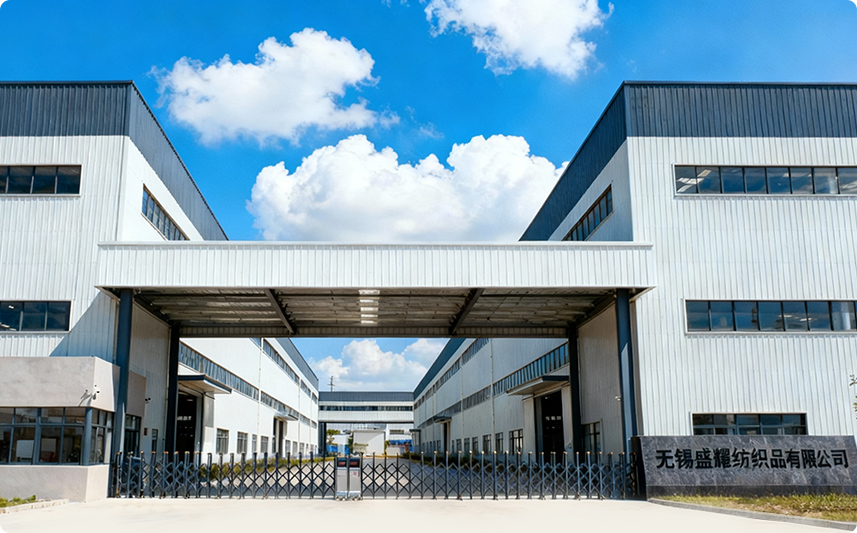
Wuxi Shengyao Textile Co., Ltd.
Wuxi Shengyao Textile Co.,Ltd.
We are dedicated to providing high-quality woven and knitted fabrics for garment and industrial textile customers worldwide. We are China Tencel Spandex/Twill Fabric Suppliers and Wholesale
Tencel Lyocell Clothing Exporter, Company. Shengyao is more than a trading company; we act as a vital link between tradition and innovation, seamlessly integrating the exquisite craftsmanship of our partner factories with the diverse demands of the global market.Spanning cotton, linen and functional blended fabrics, every product in our portfolio stems from carefully selected partners, rigorous quality management and a lasting commitment to service. Every meter of our fabric embodies Shengyao’s core beliefs: stability, creativity and dedication.
News
-
-
The Core Manufacturing Process Woven cotton fabric is manufactured by interlacing two sets of yarns at right angles — the vertical warp yarns and the horizontal weft (filling) yarns — on a loom. Before weaving, the warp yarns undergo critical preparation including warping and s...
VIEW MORE -
Direct Answer: The Core Difference CVC (Chief Value Cotton) and TC (Tetoron Cotton / Polyester-Cotton) are distinguished primarily by their cotton-to-polyester ratio and performance priority. CVC contains more than 50% cotton (typically 60% cotton / 40% polyester or 80/20), m...
VIEW MORE
Tencel Fabric Industry knowledge
The Ultimate Guide to Selecting High-Performance Blended Fabrics for Garment Manufacturing
Understanding the Evolution of Blended Textiles
In the highly competitive garment manufacturing industry, selecting the right fabric is the foundational step toward achieving premium product quality. As a senior manufacturing expert, I often see brands struggling to balance comfort, durability, and cost-efficiency. This is precisely where engineered blends come into play. By combining the breathability of natural fibers with the resilience of synthetics, modern mills have developed textiles that meet the rigorous demands of global apparel production. Understanding the structural benefits of materials like CVC/TC Cotton Fabric is essential for making informed sourcing decisions that elevate your final product.
- Bridging the gap between pure cotton softness and polyester's structural integrity
- Optimizing production costs without compromising on hand-feel or aesthetic appeal
- Meeting diverse global market demands for everyday workwear to high-end shirting
The Core Mechanics of CVC vs. TC Fabric Blends
When textile professionals discuss CVC/TC Cotton Fabric, they are evaluating the ratio of Cotton to Polyester. "CVC" stands for Chief Value Cotton, meaning the blend contains a higher percentage of cotton (usually 60% Cotton / 40% Polyester). Conversely, "TC" stands for Tetron Cotton (or Polyester Cotton), where polyester is the dominant fiber (typically 65% Polyester / 35% Cotton). This fundamental shift in ratios drastically alters the fabric's physical properties, dyeing behavior, and end-use applications. Selecting the correct composition dictates how the garment will perform after multiple washes and prolonged wear.
- CVC blends provide a superior surface for reactive dyes, yielding richer, deeper colors
- TC blends offer enhanced tensile strength, reducing seam slippage during high-speed sewing
- The yarn spinning process for CVC requires tighter control to prevent polyester core migration
Structural Comparison: CVC vs. TC Blends
To better visualize how these blends perform under manufacturing and wearing conditions, we have compiled a comprehensive breakdown of their core characteristics. This comparison is designed to help procurement teams align fabric specifications with their specific garment requirements.
| Feature | CVC Blend (60/40) | TC Blend (65/35) |
| Surface Hand-Feel | Soft, natural cotton dominance | Slightly slicker, synthetic touch |
| Durability | High, with good abrasion resistance | Exceptional, high tensile strength |
| Shrinkage Control | Moderate (requires pre-shrinking) | Excellent (highly dimensionally stable) |
| Moisture Absorption | Stronger breathability | Lower, dries faster |
| Cost Efficiency | Mid-range premium | Highly economical for bulk orders |
Elevating Formal and Casual Wear with CVC Shirting Fabric
For apparel categories requiring a crisp, professional appearance, CVC Shirting Fabric is the undisputed industry standard. Because the cotton fibers wrap around the polyester core, the fabric takes on a smooth, natural face that absorbs reactive dyes beautifully. This results in vibrant, solid colors and sharp prints that do not fade as quickly as pure synthetics. Furthermore, the underlying polyester framework prevents the severe wrinkling and shrinkage typical of 100% cotton dress shirts, ensuring the garment maintains a polished look throughout an 8-hour workday. From a manufacturing standpoint, this fabric cuts cleanly and sews smoothly, significantly reducing production bottlenecks.
- Ideal for tailored shirts, blouses, and uniform programs requiring a premium aesthetic
- Offers excellent color fastness to washing and rubbing, extending garment lifespan
- Reduces the need for excessive ironing or chemical finishing treatments post-wash
Engineering Durability for Workwear and Casual Apparel
When the application calls for maximum toughness, such as heavy-duty workwear, tactical garments, or robust casual pants, TC Twill Fabric emerges as the optimal choice. The twill weave structure itself—characterized by its distinct diagonal rib—provides superior tensile strength and drape compared to plain weaves. When combined with a TC (polyester-dominant) yarn, the resulting fabric becomes incredibly resistant to tearing, pilling, and environmental degradation. The higher polyester content acts as a protective shield, making this fabric highly resistant to industrial laundering, harsh chemicals, and UV exposure.
- The diagonal twill weave naturally hides soil and stains, a critical factor for workwear
- Exceptional tear strength minimizes field failures and costly warranty returns
- Highly receptive to specialized functional finishes like water repellency and flame retardancy
Twill Weave Advantages in TC Fabrication
The mechanical advantage of a twill weave cannot be overstated when applied to polyester-heavy blends. By interlacing the yarns in a specific offset pattern, the fabric distributes stress more evenly across the surface area. We have detailed the specific manufacturing benefits below to illustrate why this construction is favored by industrial garment makers.
| Manufacturing Metric | TC Twill Performance | Standard Plain Weave TC |
| Yarn Density Potential | Higher (allows tighter packing) | Lower (reaches packing limit faster) |
| Abrasion Resistance | Excellent (floats protect yarns) | Good (uniform wear distribution) |
| Drapability | Soft, fluid drape | Stiffer, more rigid hand |
| Fabric Weight Range | Typically 180gsm - 320gsm | Typically 120gsm - 200gsm |
FAQ
What is the exact difference between CVC and TC fabric, and which is better for shirts?
The primary difference lies in the fiber ratio. CVC (Chief Value Cotton) contains more cotton than polyester (usually 60/40), whereas TC (Tetron Cotton) contains more polyester (usually 65/35). If your priority is a soft hand-feel, rich color depth, and a natural aesthetic, CVC Shirting Fabric is significantly better for shirts. However, if you are producing heavy-duty work shirts where extreme durability, low shrinkage, and cost-control are the main concerns, a TC blend may be more appropriate.
Why does TC Twill Fabric resist wrinkles and abrasion better than pure cotton?
Polyester fibers are thermoplastic and possess a highly crystalline molecular structure, making them inherently resistant to bending, stretching, and surface abrasion. In a TC Twill Fabric, the dominant polyester content provides a rigid skeletal framework that prevents the yarns from creasing easily. Additionally, the twill weave's floating yarn segments create a smoother surface that bears the brunt of friction, further enhancing the fabric's abrasion resistance compared to the interlacing points found in plain weaves or the softer, weaker structure of pure cotton.
Can CVC/TC Cotton Fabric be treated with functional finishes like water repellency?
Absolutely. Both CVC/TC Cotton Fabric variants are highly suitable for functional chemical finishes. Because the polyester component is hydrophobic by nature, it provides an excellent foundation for DWR (Durable Water Repellent) coatings, PU (Polyurethane) laminations, or anti-microbial treatments. The cotton component ensures the fabric remains breathable. During the finishing process, careful control of the curing temperature is required to ensure the chemical binders adhere properly to both the natural and synthetic fibers without degrading the fabric's tensile strength.
How does the cost of CVC blends compare to TC blends in bulk manufacturing?
Because raw cotton is historically more expensive than raw polyester, CVC Shirting Fabric carries a higher raw material cost, typically ranging from 10% to 20% more than a comparable TC Twill Fabric. However, CVC fabrics often require less complex finishing processes to achieve a premium hand-feel. Procurement teams must analyze the total cost of ownership: while TC is cheaper per meter, CVC may yield higher retail margins due to its superior consumer perceived value, making it the smarter choice for mid-to-high tier market positioning.
- Product Categories
- Woven Fabric
- Knitted Fabric
- Contact
-
-
Catherine(Sales Executive International Dep)

WhatsApp / Mobile : +86-13093095092
E-mail : [email protected] -
No. 98 Dongsheng Road, Dongsheng Village, Donggang Town, Xishan District, Wuxi City, Jiangsu Province, China

-
Let's Work Together
From cotton and linen to functional blended fabrics, every meter of fabric carries Shengyao's beliefs: stability, creativity, and dedication.