English
  Français
  Español
Understanding Cotton Ponte Fabric Cotton ponte fabric is a double knit fabric constructed on a circular or flatbed knitting machine using two sets of needles working in interlock formation. This construction produces a fabric that looks identical on both the face and back, givin...
VIEW MORE
Cotton/Span Stretch Fabric
Cotton Spandex Mix Fabric Suppliers
About
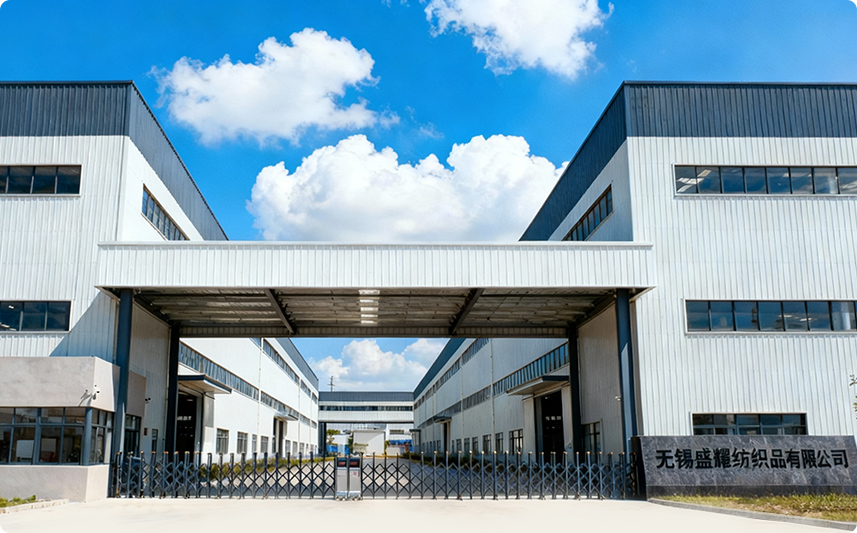
Wuxi Shengyao Textile Co., Ltd.
Wuxi Shengyao Textile Co.,Ltd.
We are dedicated to providing high-quality woven and knitted fabrics for garment and industrial textile customers worldwide. We are China Cotton Spandex Fabric Suppliers and Wholesale
Cotton Spandex Mix Fabric Exporter, Company. Shengyao is more than a trading company; we act as a vital link between tradition and innovation, seamlessly integrating the exquisite craftsmanship of our partner factories with the diverse demands of the global market.Spanning cotton, linen and functional blended fabrics, every product in our portfolio stems from carefully selected partners, rigorous quality management and a lasting commitment to service. Every meter of our fabric embodies Shengyao’s core beliefs: stability, creativity and dedication.
News
-
-
What Is Knitted Fabric? A Direct Answer Knitted fabric is a textile structure formed by the intermeshing of yarn loops in a series of interconnected rows. Unlike woven fabrics, which are made by interlacing two sets of yarns at right angles, knitted fabrics are constructed from ...
VIEW MORE -
The Core Manufacturing Process Woven cotton fabric is manufactured by interlacing two sets of yarns at right angles — the vertical warp yarns and the horizontal weft (filling) yarns — on a loom. Before weaving, the warp yarns undergo critical preparation including warping and s...
VIEW MORE
Cotton/Span Stretch Fabric Industry knowledge
Why Spandex Content Percentage Defines the Fabric's Character
In any Cotton Spandex Fabric, the spandex component — also referred to as elastane or Lycra — typically accounts for 2% to 10% of total fiber weight. That narrow range produces outcomes far more varied than the numbers suggest. At 2–3%, the fabric gains just enough recovery to smooth out seat and knee bagging in structured trousers while retaining the stiff hand feel most associated with woven cotton. At 5–7%, stretch becomes perceptible and directional, giving designers latitude to reduce ease allowances in fitted silhouettes. At 8–10%, the fabric crosses into high-stretch territory, approaching the performance characteristics more commonly associated with knitted constructions.
This matters practically because buyers often specify "cotton spandex" without anchoring to a percentage, which can result in a shipment that performs correctly in tensile testing but feels wrong on the body. Elongation at break and elastic recovery rate — typically expressed as a percentage after 30 minutes of relaxation — are the two metrics that translate spandex content into real-world behavior. A fabric with 4% spandex and a well-engineered weave structure can outperform a 7% spandex fabric with poor recovery if the latter was heat-set improperly during finishing.
Shengyao works with partner mills that document spandex content, elongation, and recovery across production lots — not just at the sample stage — so that bulk orders reflect the same mechanical properties the customer approved at the outset.
Weave Structures Best Suited to Cotton Spandex Blends
Not every weave structure accommodates spandex equally well. Plain weaves — the tightest interlacing pattern — tend to restrict the spandex core yarn's ability to contract freely, which can reduce the effective stretch the finished fabric delivers relative to its fiber content. Twill weaves, where each weft thread passes over two or more warp threads in a stepped diagonal, create longer float lengths that give the spandex more mechanical room to elongate and recover. This is why stretch twills dominate the woven bottom-weight market for jeans, chinos, and dress trousers.
Satin and sateen weaves take this further, with longer floats that produce a smooth, lustrous surface alongside excellent drape. When combined with a cotton spandex mix fabric construction, satin-based fabrics offer a refined aesthetic suited to tailored separates and occasion wear — provided the finishing process maintains surface integrity, since longer floats are more susceptible to snagging during garment production.
Thread count interacts directly with stretch performance. A high thread count locks the weave tightly, reducing elongation even when spandex is present — useful for structured outerwear where controlled stretch is preferred. A lower thread count with the same spandex percentage produces a more elastic hand. Matching weave density to the required stretch range is as important as the fiber ratio itself.
Laundering, Shrinkage, and Dimensional Stability Over Time
Cotton's natural tendency to shrink and spandex's sensitivity to heat create a compounding challenge during care and maintenance. Cotton fibers swell when wet and contract as they dry, a process that can reduce fabric dimensions by 3–8% in the first wash if the fabric has not been pre-shrunk during finishing. Spandex, meanwhile, degrades progressively above 60°C — a temperature routinely reached in commercial dryers and some domestic machines set to high heat.
Pre-shrinking treatments applied at the mill stage — compressive shrinkage (Sanforizing) being the most common — bring residual shrinkage below 1% and are standard practice for quality woven cotton spandex goods. Buyers should confirm whether pre-shrinking is included in the fabric specification, as omitting it shifts the shrinkage problem downstream to the garment manufacturer, who must compensate with larger cutting patterns.
For end consumers, cold or warm machine wash (30–40°C) with line drying is the care regime that best preserves both cotton's dimensional stability and spandex elasticity. Chlorine bleach accelerates spandex degradation rapidly — even a single exposure can reduce elastic recovery measurably — which is why care labels on stretch woven garments consistently specify non-chlorine bleach only. Shengyao's quality management process includes wash fastness testing to ISO 105-C06 standards, ensuring fabric behavior under care conditions is verified before goods leave the factory.
Application Fit: Matching Fabric Weight and Stretch to the Garment Category
Weight per square meter (GSM) is the practical starting point when matching a Cotton Spandex Mix Fabric to a specific garment category. Lightweight constructions in the 120–160 GSM range suit shirting, blouses, and unlined summer trousers where breathability and fluid drape are priorities. Mid-weights at 180–240 GSM cover the broadest application range — chinos, casual pants, structured skirts, and fitted jackets — offering enough body to hold shape through a full day of wear without excessive weight. Heavy-weights above 260 GSM are used in workwear, denim-alternative bottoms, and outerwear where durability and abrasion resistance take precedence over drape.
Stretch direction adds another axis to the selection decision:
- Two-way stretch (weft direction only) — Standard in most woven stretch fabrics. Provides comfort across the hip and thigh in pants, or across the back and shoulders in fitted tops. Simpler to sew and more dimensionally stable than four-way constructions.
- Four-way stretch (warp and weft) — Achieved by incorporating spandex into both yarn directions. Offers freedom of movement in all planes, used in performance-oriented garments, equestrian wear, and close-fitting styles where the pattern has minimal ease built in.
Garment manufacturers cutting stretch wovens should also account for fabric relaxation before cutting — allowing rolls to rest flat for 24 hours after unrolling eliminates tension-related distortion that causes finished garment measurements to drift from spec. This is a handling standard rather than a fabric defect, but one that distinguishes experienced cut-and-sew operations from those less familiar with stretch woven materials.
- Product Categories
- Woven Fabric
- Knitted Fabric
- Contact
-
-
Catherine(Sales Executive International Dep)

WhatsApp / Mobile : +86-13093095092
E-mail : [email protected] -
No. 98 Dongsheng Road, Dongsheng Village, Donggang Town, Xishan District, Wuxi City, Jiangsu Province, China

-
Let's Work Together
From cotton and linen to functional blended fabrics, every meter of fabric carries Shengyao's beliefs: stability, creativity, and dedication.